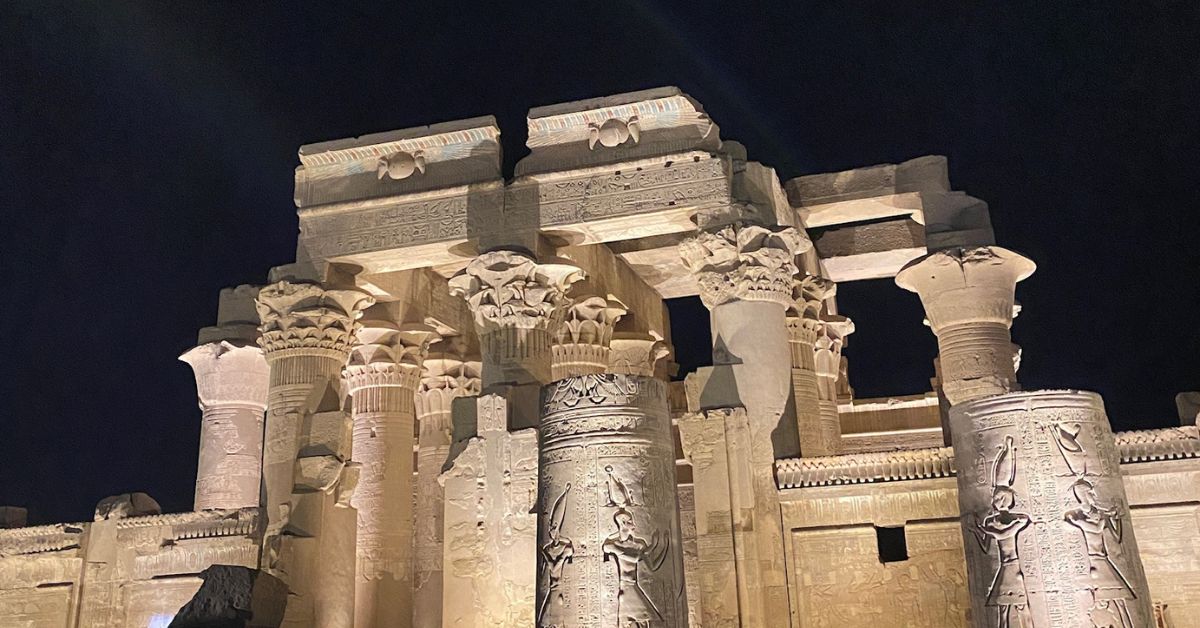
Kom Ombo Temple in Egypt: Everything You Need to Know (2025)
Ever visited a temple dedicated to both a falcon god and a crocodile? The Kom Ombo Temple in Egypt is one of the most unusual—and unexpectedly fascinating—places I saw along the Nile.
I visited the Temple of Kom Ombo during my Nile cruise from Aswan to Luxor. Honestly, I wasn’t expecting much. With famous sites like Abu Simbel and the dreamy Philae Temple nearby, I figured this would be a quick stop for a photo or two.
But wow—I was wrong.
With its rare double layout, riverside setting, and a whole room of crocodile mummies (yes, actual mummified crocodiles!), the Kom Ombo Temple ended up being one of my favorite surprises in Egypt. It’s now high on my list of things to do in Aswan.
In this post, I’ll share everything you need to know about visiting the Temple of Kom Ombo—from how to get there and what to expect, to my personal tips for making the most of your visit.
Table of Contents
This post is all about visiting Kom Ombo Temple in Egypt
This post may contain affiliate links, which means I’ll receive a commission if you purchase through my link, at no extra cost to you. As an Amazon Associate, I earn from qualifying purchases. Thanks so much for supporting the blog—it means a lot!
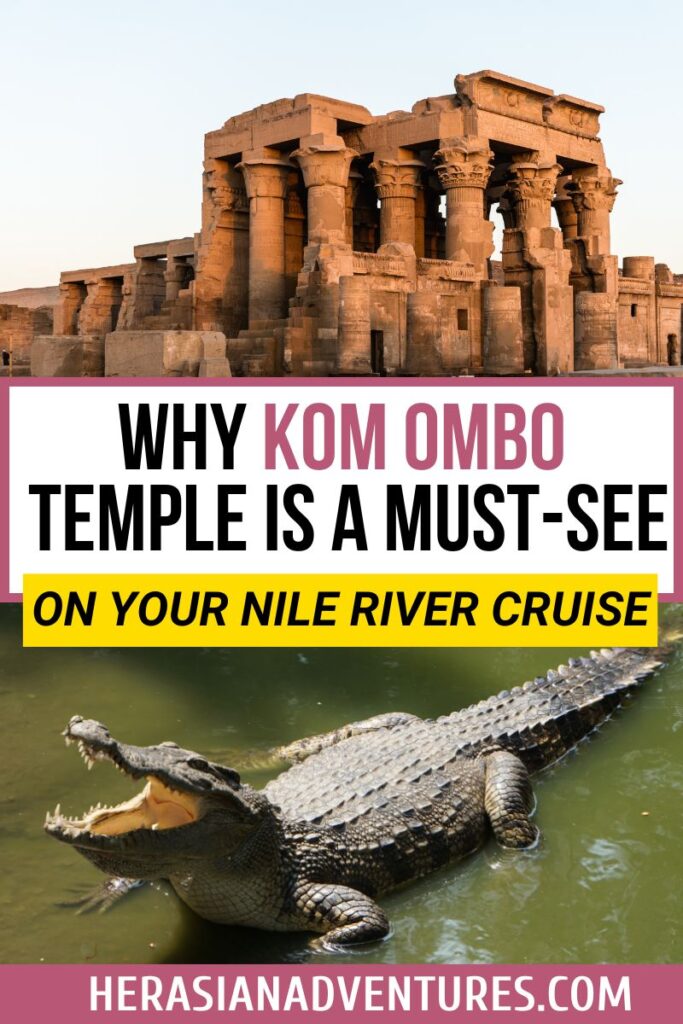
Why Kom Ombo Temple in Egypt Is Worth Visiting
Yes—Kom Ombo Temple in Egypt is absolutely worth visiting, especially if you’re traveling between Aswan and Luxor.
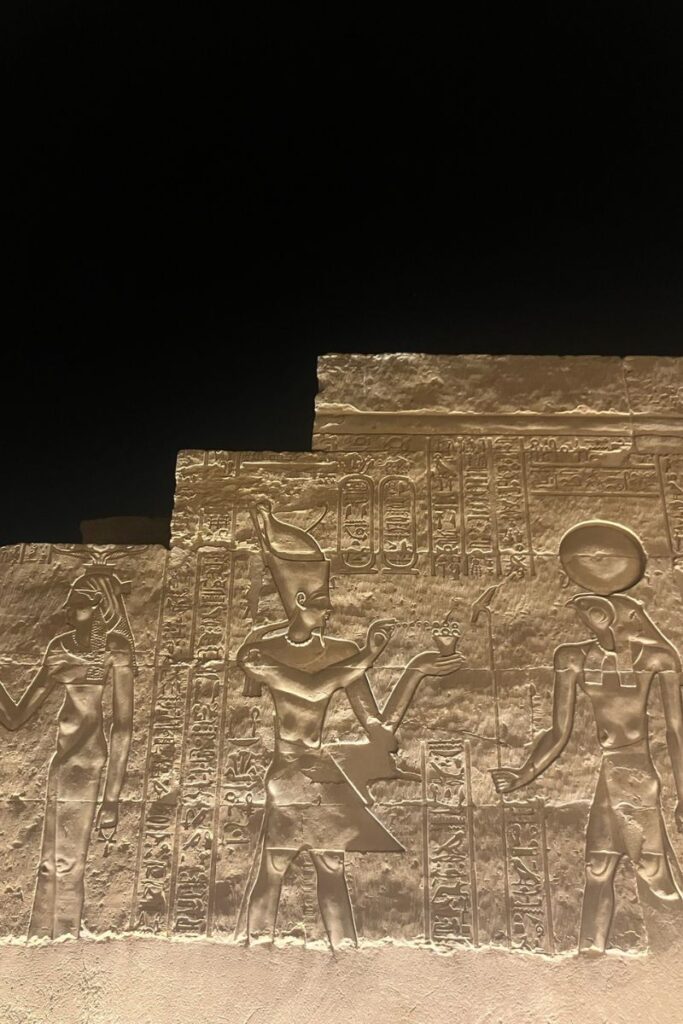
What makes it special is its rare double layout. Unlike most famous temples in Egypt, Kom Ombo is dedicated to two gods—Sobek, the crocodile god, and Horus the Elder, the falcon god. Each side mirrors the other, so it feels like two temples in one.
Here’s why I think the Temple of Kom Ombo is 100% worth visiting:
- Everything is duplicated—from the entrances to the sanctuaries
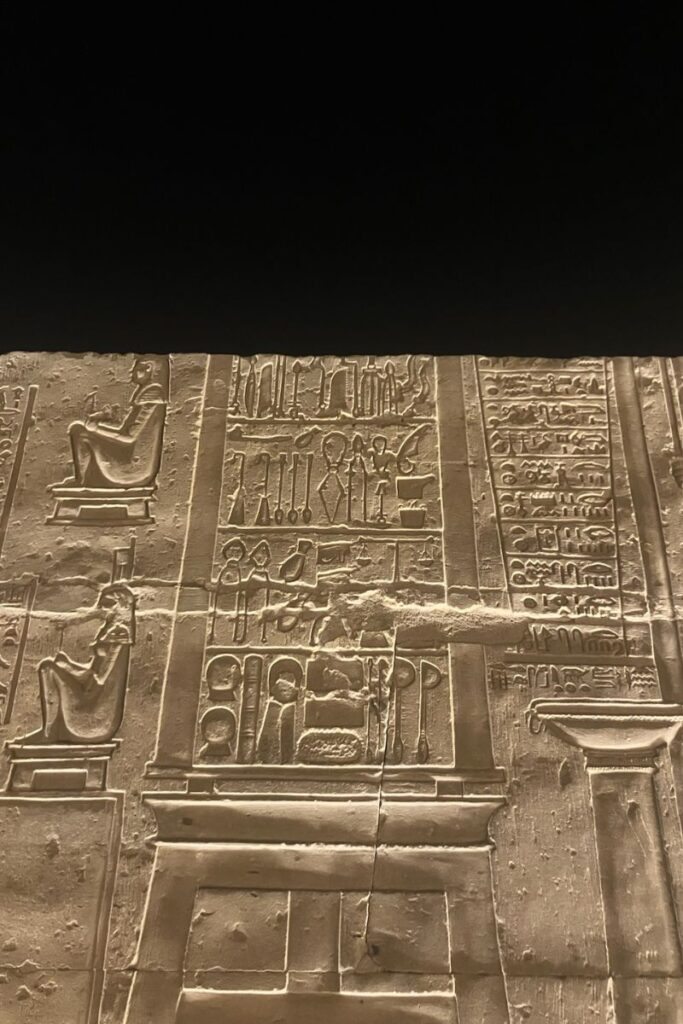
- You’ll see ancient carvings of surgical tools and healing scenes
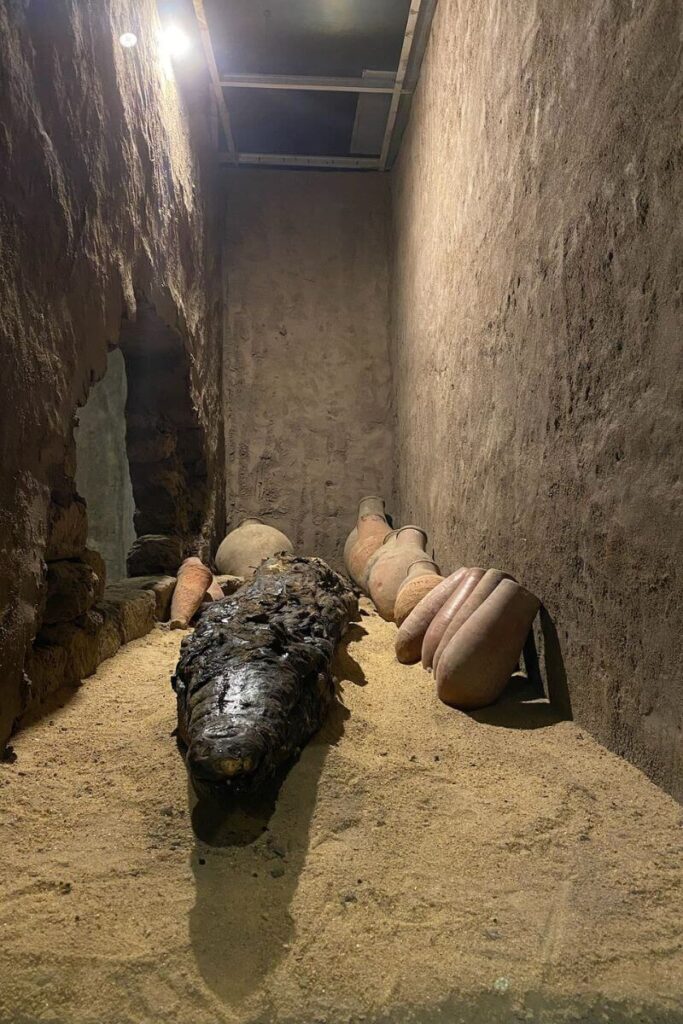
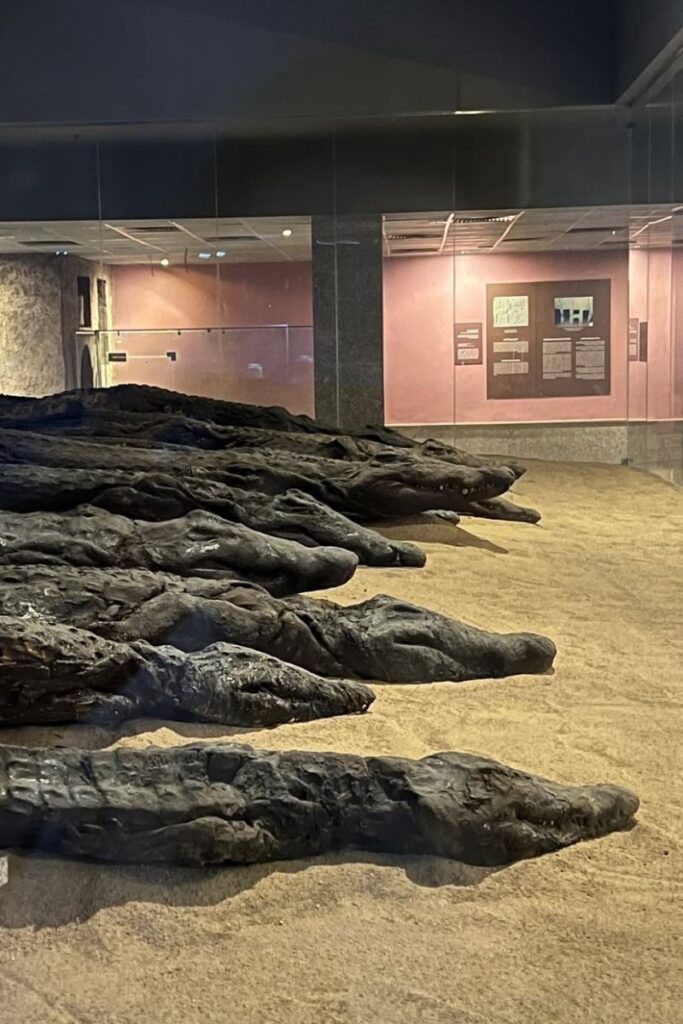
- There’s a small museum with actual mummified crocodiles
- It sits right on the Nile, so the views are absolutely gorgeous
- It’s usually quieter than places like Karnak, which makes exploring way more relaxing
If you’re planning a Nile cruise or mapping out your 10-day Egypt itinerary, Kom Ombo Temple is a quick, easy, and unforgettable stop. I wouldn’t leave it off your list!
📌 Read Next: 10 Top Destinations in Egypt for Your Next Trip
Best Time to Visit Kom Ombo Temple in Egypt
The best time to visit the Kom Ombo Temple in Egypt is either early morning or late afternoon. That’s when the sun is softer, the crowds are smaller, and it’s much more comfortable to explore.
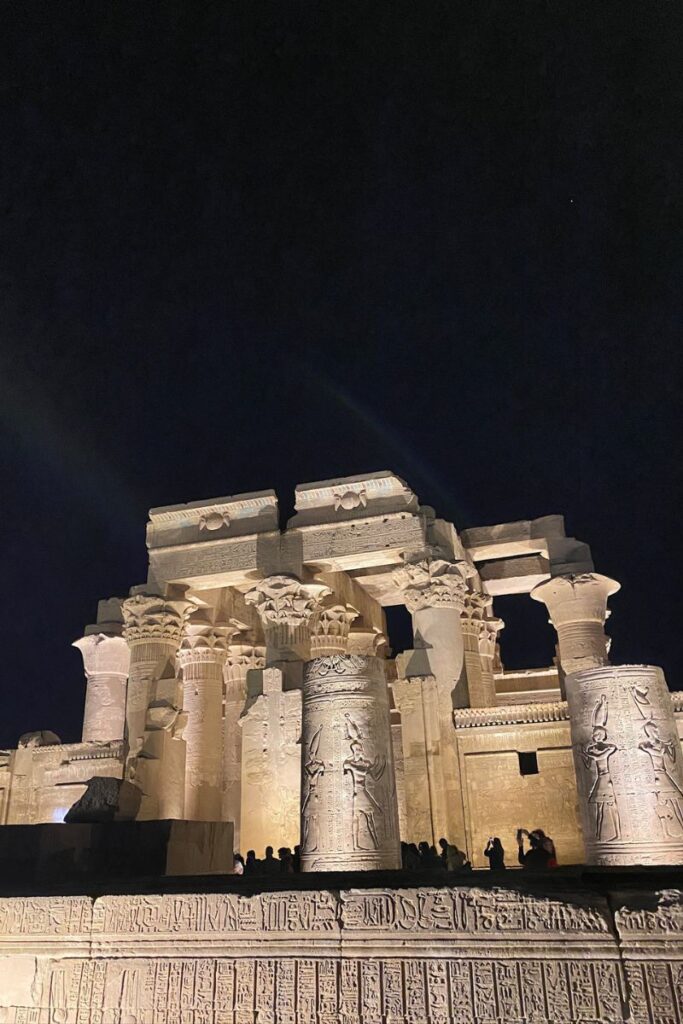
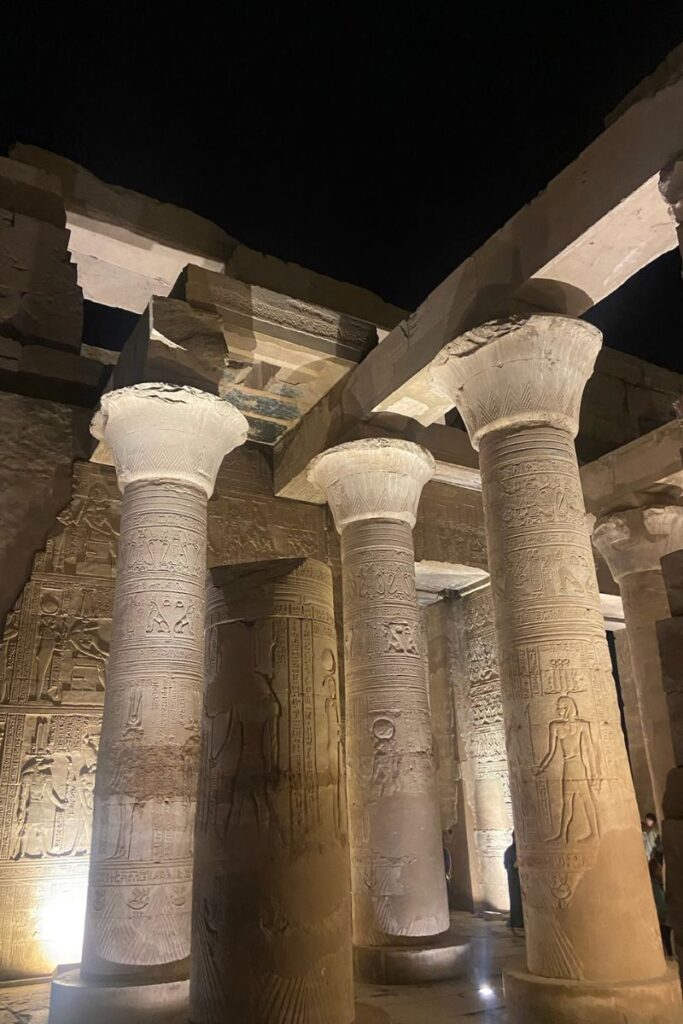
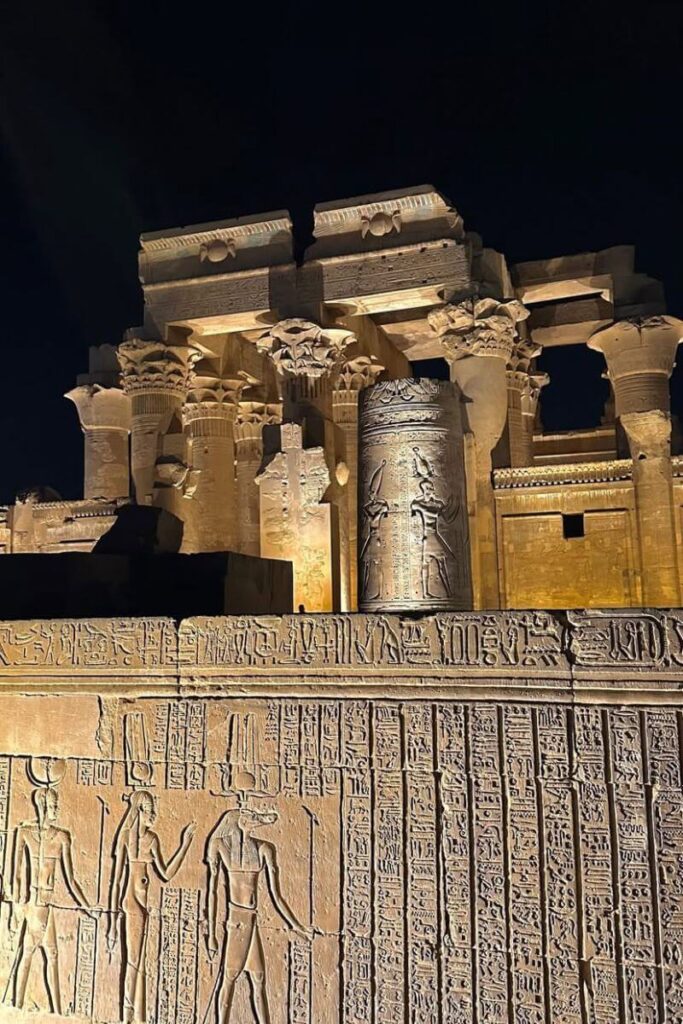
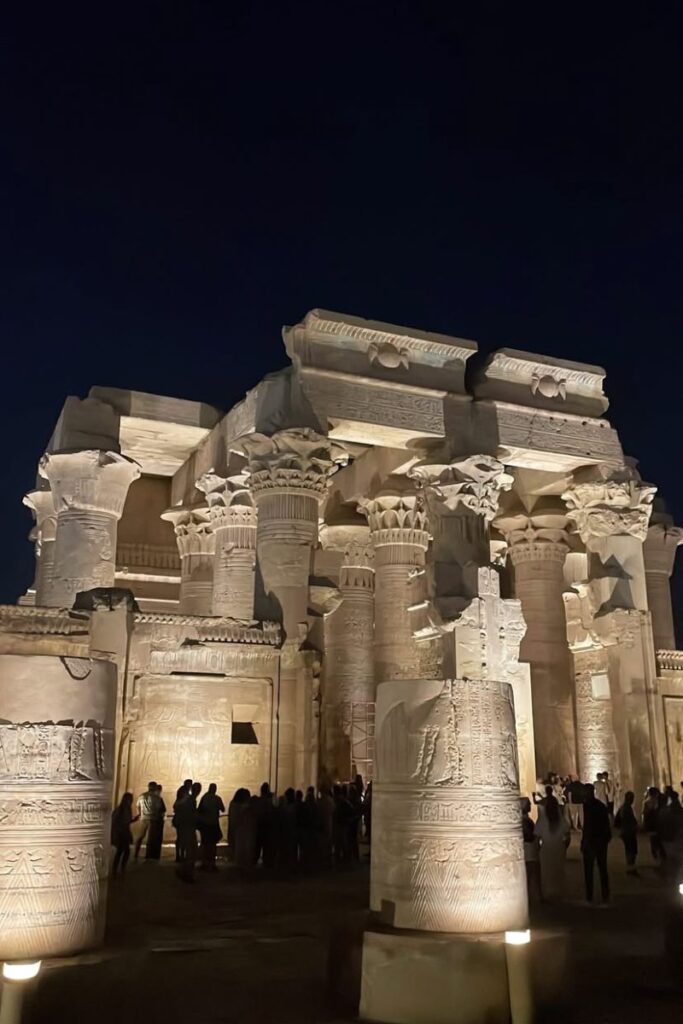
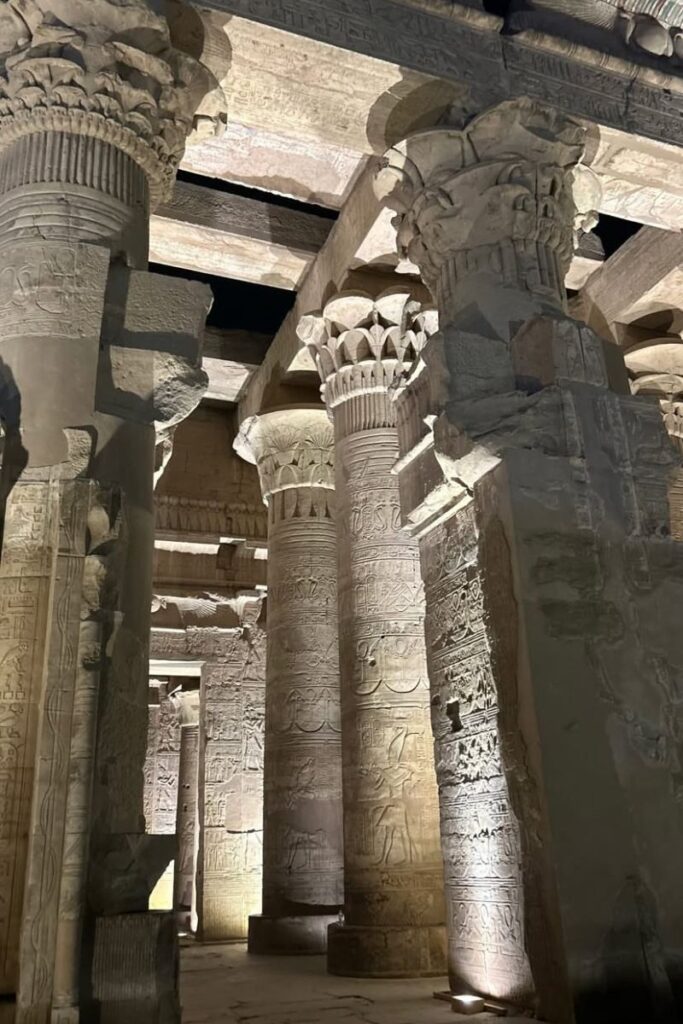
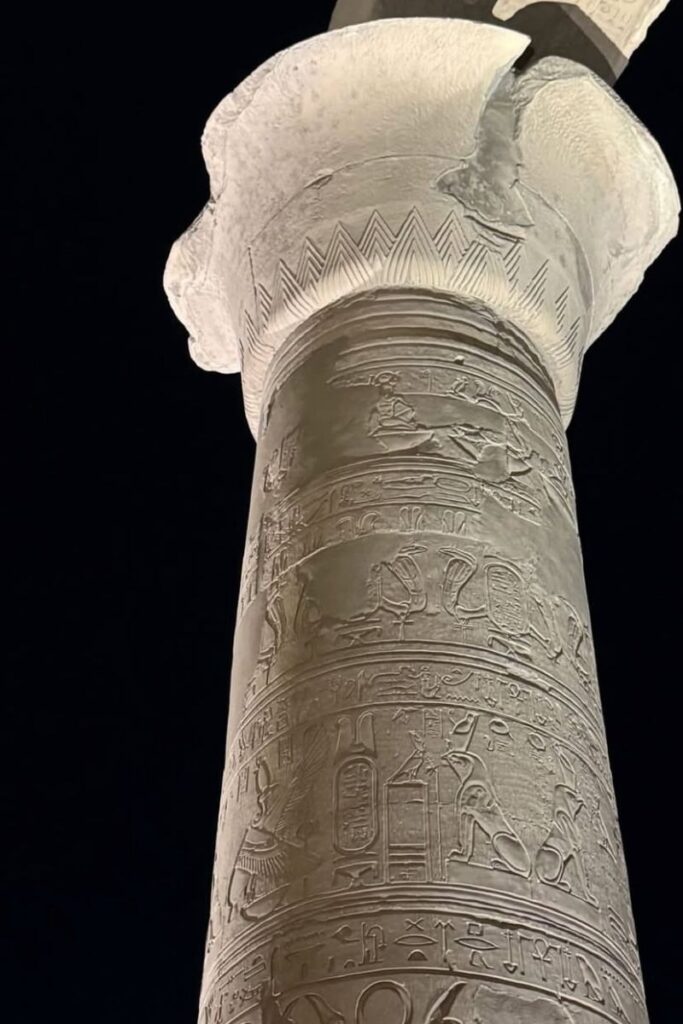
The Temple of Kom Ombo is open daily from 7:00 AM to 9:00 PM, with last entry at 8:00 PM. Most Nile cruises stop in the late afternoon, which was the perfect time for us. We stayed past sunset, and seeing the temple all lit up made it one of the most unique things to do in Egypt.
If you’re visiting Egypt in summer, I’d recommend wearing light, breathable clothes and avoiding the midday hours. There’s barely any shade at Kom Ombo Temple, and it can get seriously hot.
📌 Read Next: 8 Perfect Outfits for Women Visiting Egypt

How to Get to the Temple of Kom Ombo
Kom Ombo Temple is located right along the Nile, about 45 km north of Aswan. It’s a small town with not much else going on—but the temple alone makes it worth the stop. Most travelers visit as part of a Nile cruise, which is by far the easiest option.
If You’re on a Nile Cruise
Most Nile cruises stop at the Kom Ombo Temple in the late afternoon, either on the way from Aswan to Luxor or the other way around. The boat docks right next to the site, and it’s just a short, easy walk from the riverbank to the entrance.
This was honestly one of the smoothest stops on my Aswan to Luxor Nile cruise. We stepped off the boat and walked straight in. Compared to places like Edfu, where the carriage rides can be rough, visiting Kom Ombo Temple was a breeze.
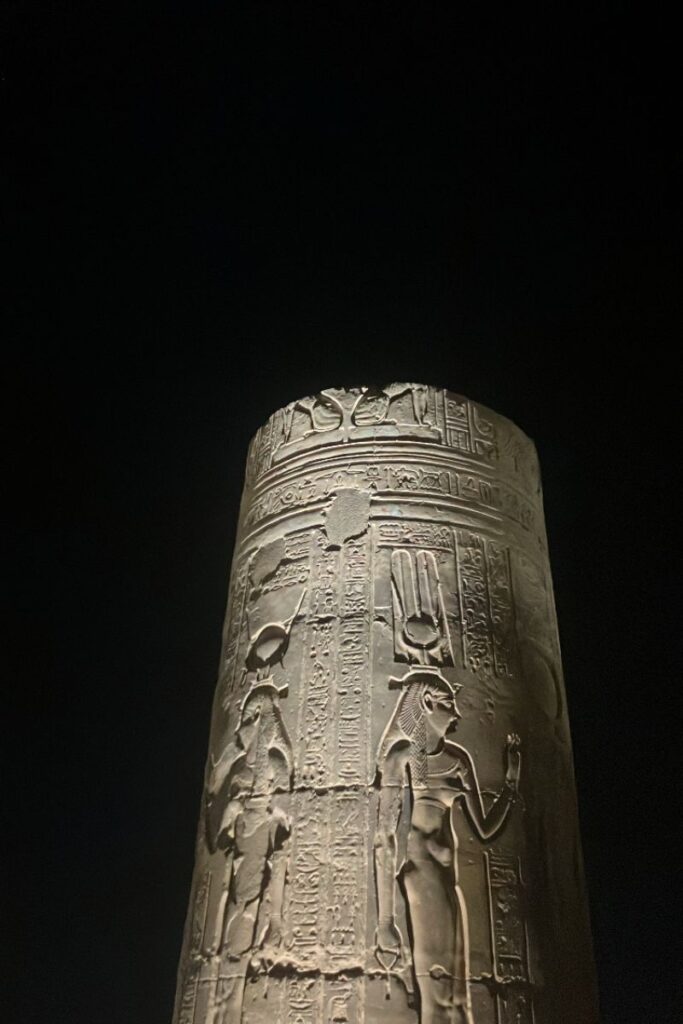
⭐ Pro Tip: Don’t rush back to the boat right after sunset. The temple looks incredible when it’s lit up at night—and it’s a great chance to take photos without the crowds.
If You’re Traveling Independently
You can visit Kom Ombo Temple without a cruise, but it takes a bit more planning. Trains run regularly between Luxor and Aswan, and Kom Ombo has a station just a few minutes from the temple.
From the train station, you can either walk (about 15–20 minutes) or grab a local taxi. It’s a doable day trip from Aswan, especially if you combine it with nearby Edfu Temple.
A better option? Book a private day trip that includes both Kom Ombo and Edfu, like this one from Aswan to Luxor. It’s way more comfortable, totally stress-free, and saves you from figuring out transport on your own.
⭐ Bonus Tip: Uber doesn’t work in Kom Ombo, Luxor, or Aswan. If you’re wondering how to get around, I’ve shared all my transport tips in this Uber in Egypt guide.
What to See at Kom Ombo Temple in Egypt
Compared to other ancient sites, the Kom Ombo Temple in Egypt is relatively small—you only need about an hour to explore. But don’t let that fool you. There’s so much packed into this place! Here are the top things to look out for:
1. The Twin Temples
This is what makes the Temple of Kom Ombo so unique. It was dedicated to two gods—Sobek, the crocodile god of fertility and strength, and Horus the Elder, the falcon god of healing and protection.
Each god has their own side of the temple, with separate entrances, sanctuaries, and even altars. The whole layout is perfectly symmetrical, which is super rare in ancient Egyptian architecture. It honestly feels like you’re walking through two temples in one.
2. Wall of Surgical Instruments
One of the coolest (and most unexpected) details? A wall carved with ancient surgical tools. You’ll spot scalpels, scissors, tweezers—even what looks like a bone saw.
Since Kom Ombo Temple was once a center for healing, this wall shows just how advanced traditional Egyptian medicine really was. It’s easy to miss, so keep an eye out—it’s tucked into one of the side chambers.
3. The Ancient Calendar
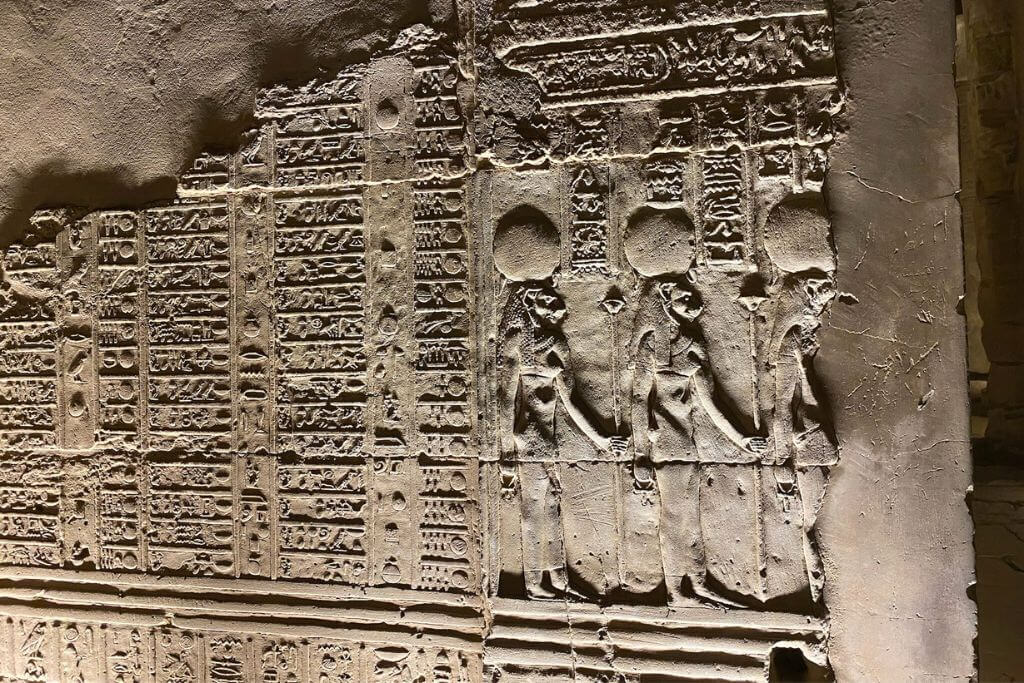
I almost walked right past this, but it turned out to be one of my favorite details. Look closely and you’ll spot a 2,200-year-old calendar carved into the stone—12 months, 30 days each, plus five extra days for festivals.
I’d seen similar pieces at the Grand Egyptian Museum in Cairo, but seeing this in the original setting at Kom Ombo Temple felt totally different. Worn by time, yet still incredibly clear. Don’t miss it.
📌 Read Next: 13 Unique Things to Do in Cairo Beyond the Pyramids
4. The Sacred Well
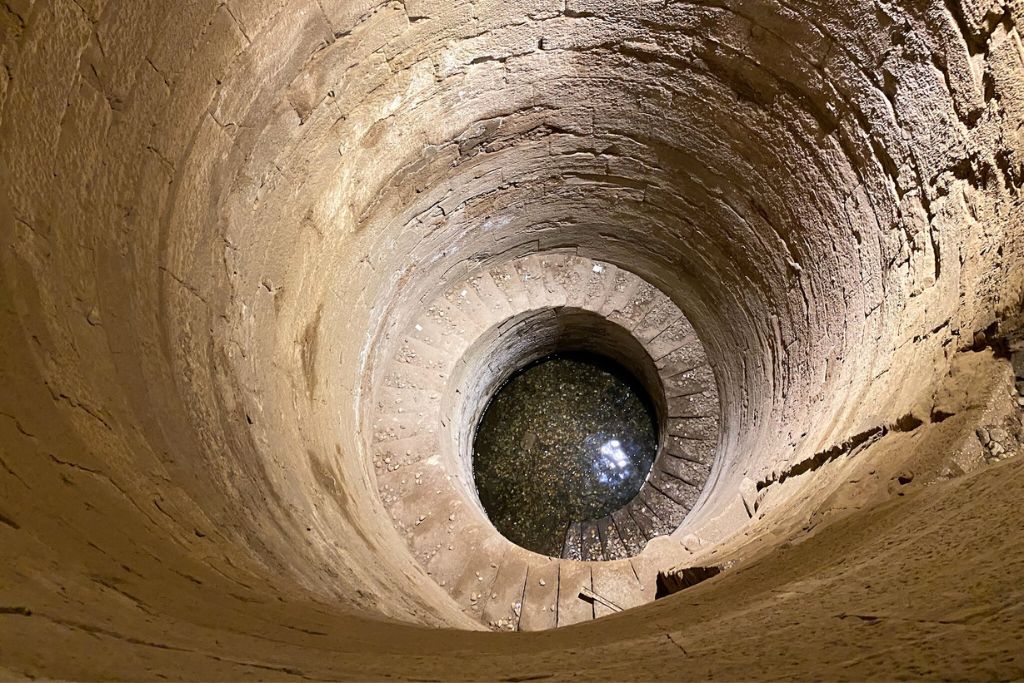
One of the more subtle things to see at Kom Ombo Temple is the ancient stone well tucked away near the back. It once pulled water straight from the Nile and played a huge role in the temple’s rituals.
It’s easy to miss, but it’s a powerful reminder of how deeply tied daily life and spiritual practices were to the river. And since Kom Ombo Temple honors Sobek—the crocodile god linked to water and fertility—it makes perfect sense that a sacred well would be part of the site.
💡 Stay Safe While Traveling Egypt
Exploring pyramids, cruising the Nile, or snorkeling the Red Sea? Travel insurance is essential. I use SafetyWing 🛡️ —affordable, flexible, and you can even sign up after your trip has started.
5. The Crocodile Museum
Right next to the temple is a small museum filled with mummified crocodiles—and it’s much more interesting than it sounds. Some are impressively large, and the display gives you a rare look at how these animals were preserved.
If you’ve seen animal mummies in Cairo or treasures from Tutankhamun’s tomb in the Valley of the Kings, this adds another layer to what you’ve already learned—focused on the unique rituals tied to this region.
The museum is air-conditioned, well-organized, and included in your Kom Ombo Temple ticket. It’s a quick stop and an easy way to round out your visit.
📌 Read Next: 10 Must-See Attractions in Luxor, Egypt
Tips for Visiting the Temple of Kom Ombo
To make your visit to the Temple of Kom Ombo as smooth and stress-free as possible, here are a few tips I really wish someone had told me before I went:
- Bring cash – There are no ATMs near the site, and small tips are often expected for things like bathroom access or casual help from staff. More on tipping in Egypt.
- Wear closed shoes – The temple grounds are rocky and dusty. Sandals might seem like a good idea, but supportive, closed-toe shoes are much more comfortable.
- Photography is welcome – You’re free to take photos throughout the Temple of Kom Ombo. Just avoid using flash inside the Crocodile Museum to help preserve the exhibits.
- Keep an eye on your belongings – I felt safe at Kom Ombo Temple, but it’s always smart to stay alert. Use a crossbody bag and keep valuables tucked away. More Egypt safety tips here.
- Plan for a quick visit – Most Nile cruises are on a schedule, so time at Kom Ombo Temple can be limited. If you want quiet moments or good photos, move quickly when you arrive.
- Don’t count on food nearby – Kom Ombo is a small town with very limited food options. Bring snacks and wait for a proper meal once you’re back on your cruise or at your hotel in Aswan or Luxor. Try these Egyptian foods.
- Hire a guide if you can – You can visit without one, but having a guide made a big difference. Ours pointed out small details we never would’ve noticed on our own.
📌 Read Next: 23 Smart Tips to Know Before Visiting Egypt
Where to Stay Near Kom Ombo Temple
Like Edfu, Kom Ombo is a small town with very limited accommodation. Unless you’re on an overnight Nile cruise, I’d recommend staying in Aswan or Luxor, where you’ll find better hotels, food, and more to explore beyond the temples.
If you’re visiting Kom Ombo Temple in Egypt and looking for a great base nearby, here are a few of my top picks in Aswan and Luxor:
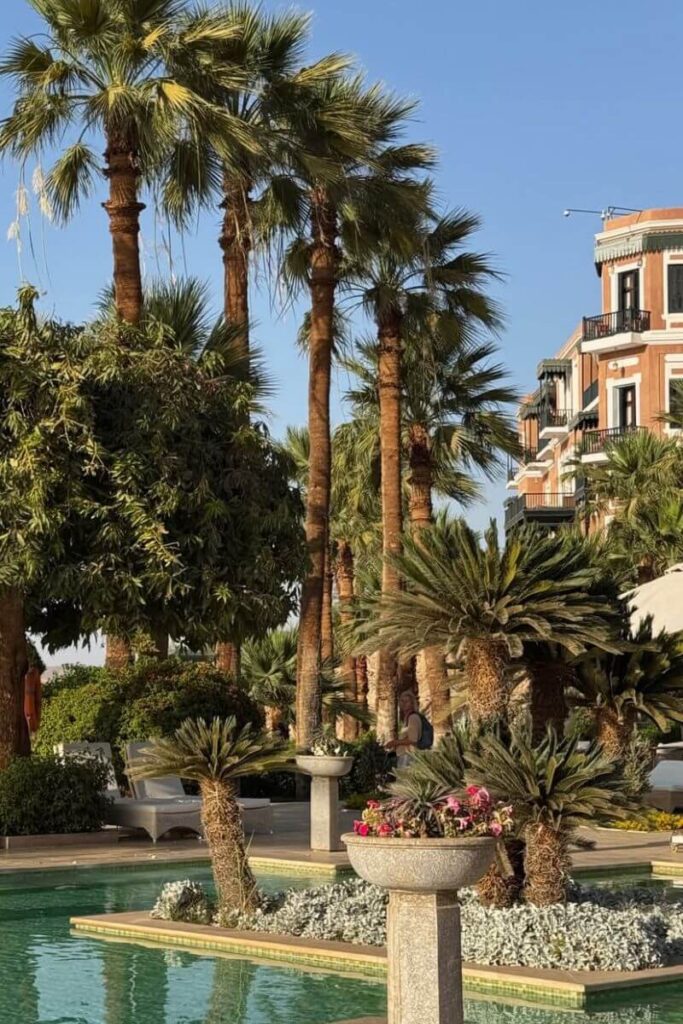
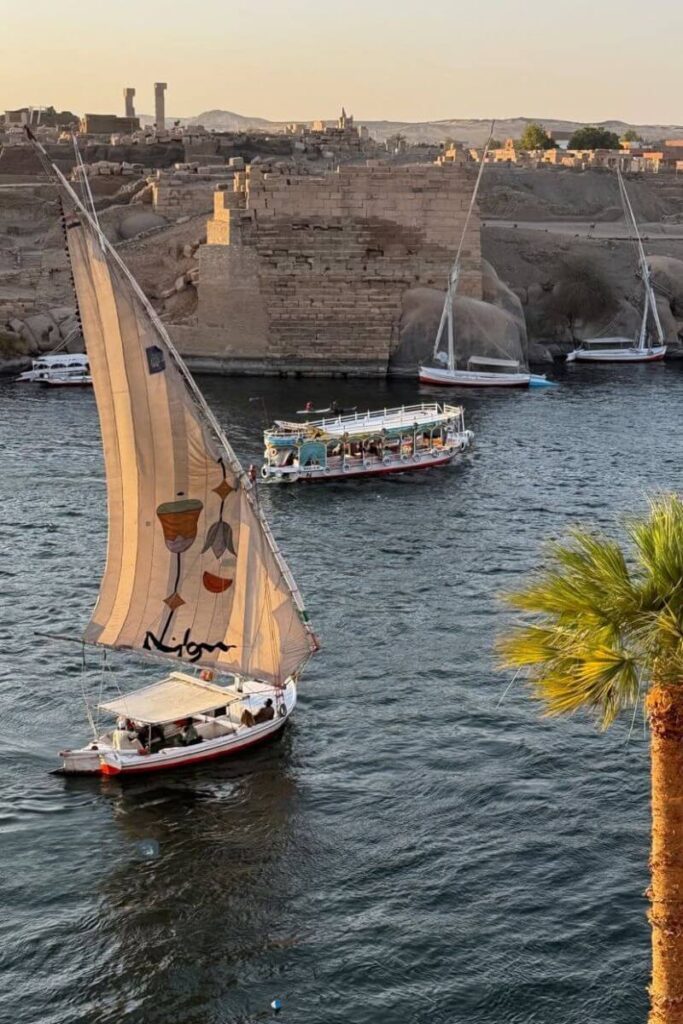
- Sofitel Legend Old Cataract (Aswan) – A historic luxury hotel with stunning Nile views.
- Kato Dool Wellness Resort (Aswan) – Bright, Nubian-style rooms in a peaceful riverside setting.
- BenBen by Dhara Hotels (Aswan) – Eco-conscious boutique hotel on its own island.
- Al Moudira Hotel (Luxor) – Stunning and serene, just outside the main city center.
- Sofitel Winter Palace (Luxor) – A classic colonial hotel with lush gardens and top-notch service.
- Malkata House (Luxor) – Cozy, budget-friendly, and full of local charm.
⭐ Want even more options? Check out my full guides to where to stay in Aswan and where to stay in Luxor—with picks for every budget and travel style.
🧳 My Favorite Travel Tools for Egypt
These are the exact tools I used during my Egypt trip—they saved me time, money, and stress 🇪🇬✨
- 🛡️ SafetyWing Travel Insurance – Affordable, flexible coverage that’s perfect for Egypt. Great for solo or long-term travelers—easy to set up and forget.
- 📶 Airalo eSIM – No SIM card lines, no hassle. I downloaded mine before landing in Cairo and had data before passport control.
- 🔐 Surfshark VPN – I used this daily in Egypt to keep my data safe and stream my shows without restrictions. Works on all your devices.
- 🧾 iVisa – Getting your Egypt eVisa only takes a few minutes with iVisa. It’s fast, easy, and all online.
- 🏨 Booking.com – My go-to for hotels across Egypt. Great prices, honest reviews, and flexible booking options.
- 🧭 GetYourGuide – Trusted platform for booking top Egypt tours—like Abu Simbel, hot air ballooning, and Nile cruises, with hotel pickup included.
FAQs About the Temple of Kom Ombo
Before we wrap up this guide to visiting Kom Ombo Temple in Egypt, here are some of the most common questions I’ve seen from travelers—plus a few personal tips I picked up during my own visit.
Kom Ombo is one of Egypt’s only double temples, dedicated to two gods: Sobek and Horus the Elder. Its perfectly symmetrical design is rare in ancient Egypt. The temple also served as a center for medicine, with detailed carvings of surgical instruments still visible on the stone walls.
Tickets usually cost around 200–250 EGP (about $6–8 USD), and that includes entry to the Crocodile Museum. Bring cash—cards aren’t accepted at the entrance, and there aren’t any ATMs nearby, especially if you’re visiting on your own without a tour.
A guide isn’t strictly necessary, but it’s highly recommended. Guides can point out small details like carvings of surgical instruments and mythological scenes that are easy to miss. If you’re interested in history or want a deeper understanding of the site, hiring a guide is a great idea.
Yes, Kom Ombo is generally safe for solo female travelers. The site is calm, not overly crowded, and vendors are usually polite. As with any travel in Egypt, it’s smart to dress modestly, stay aware of your surroundings, bring water, and keep personal belongings secure.
I’d plan for about 1 to 1.5 hours. That gives you plenty of time to explore the temple, check out the Crocodile Museum, and enjoy the riverside views without rushing. It’s not a huge site, but there’s definitely enough to keep you interested the whole time.
Final Thoughts: Visiting Kom Ombo Temple in Egypt
That’s a wrap on my complete guide to the Temple of Kom Ombo in Egypt! It might not be as big or busy as Edfu Temple, but the twin-god design, healing history, and mummified crocodiles made it one of my favorite stops on the Nile cruise.
Still on the fence about going? Here’s why I absolutely think Egypt is worth visiting.
Have you been to Kom Ombo or Edfu Temple? I’m curious—which one did you enjoy more? Share your thoughts in the comments!

Other Egypt Travel Guides You Might Enjoy:
- 15 Best Egypt Souvenirs You’ll Actually Want to Bring Home
- Ultimate Egypt Packing List for Women: 20 Essentials You Need
- 7 Stunning Mosques in Egypt You Can’t Miss
- 5 Things to Know Before Visiting the Nubian Village in Aswan
- 10 Reasons Hot Air Ballooning in Luxor Is Totally Worth It
Liked This Kom Ombo Temple Guide? Pin it for Later!


Never heard of this temple but definitely adding it to my list for my next trip to Egypt!
The crocodile museum sounds like an interesting and unique spot to visit when at Kom Ombo Temple.
Excited to visit this when I visited Egypt one day, I’d never heard of it before!
You mentioned going solo was safe but how safe is it to drive in Egypt as opposed to going on a cruise?